Bristol Myers Squibb Accelerates Site Start-Up with Data-Driven Feasibility & Activation
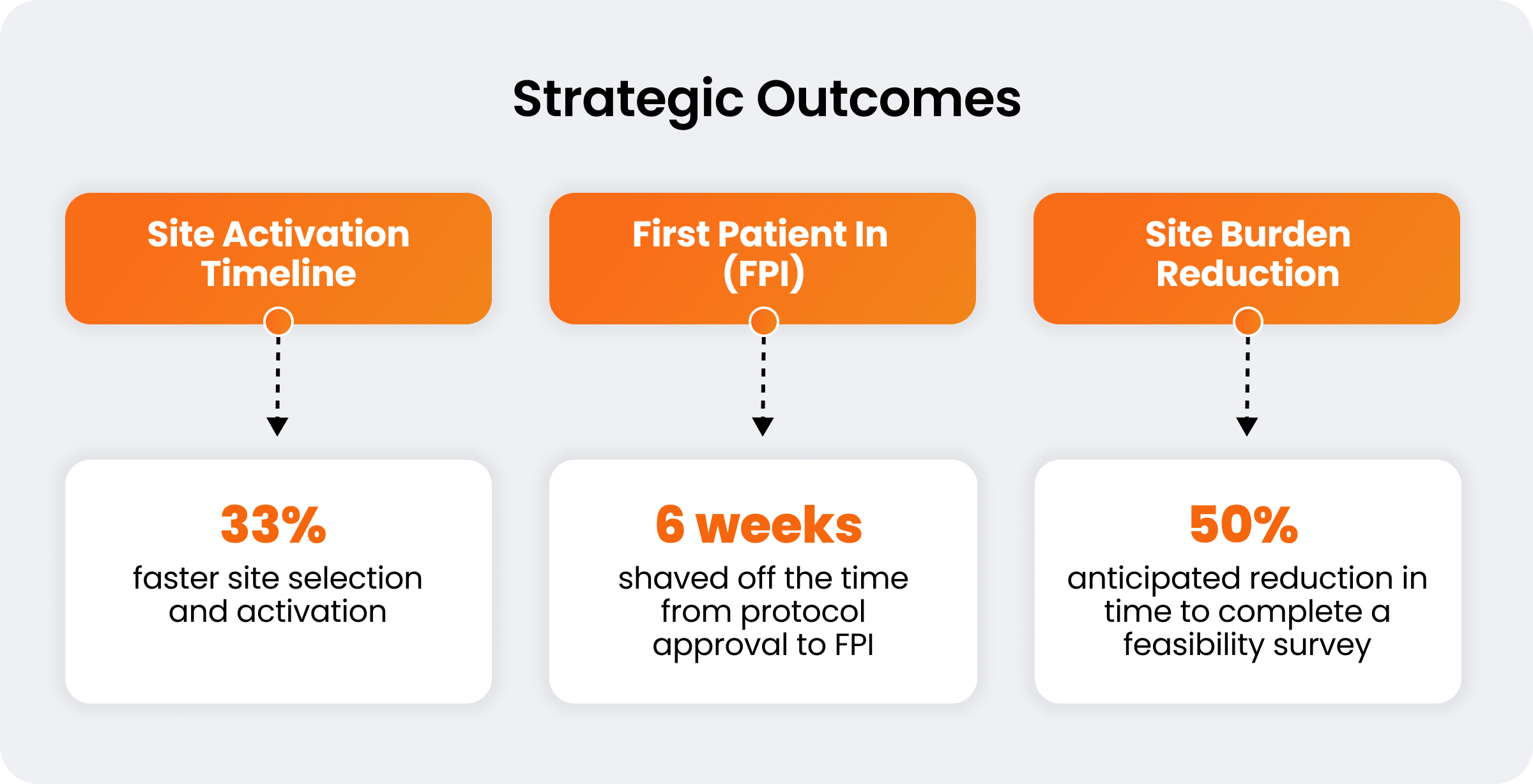
33%
faster site selection and activation
6
weeks shaved off the time from protocol approval to FPI
50%
anticipated reduction in time to complete a feasibility survey

Identifying qualified, high-performing sites for a particular study design and patient population is one of the most challenging aspects of clinical trial feasibility. Getting this right is critical to keeping studies on schedule and within budget.
For a global pharmaceutical company like Bristol Myers Squibb (BMS), efficient trial initiation depends on a strong partnership with investigator sites. While BMS sought to deepen these relationships, its technology landscape made that difficult. Study start-up and feasibility efforts relied on siloed feasibility data spread across multiple external survey tools. As a result, generating site-level insights was difficult, and historical knowledge was hard to transfer between study teams.
BMS recognized the need to consolidate feasibility data into a single system to enable consistent reporting and dashboards.
The challenge: fragmented data and site frustration
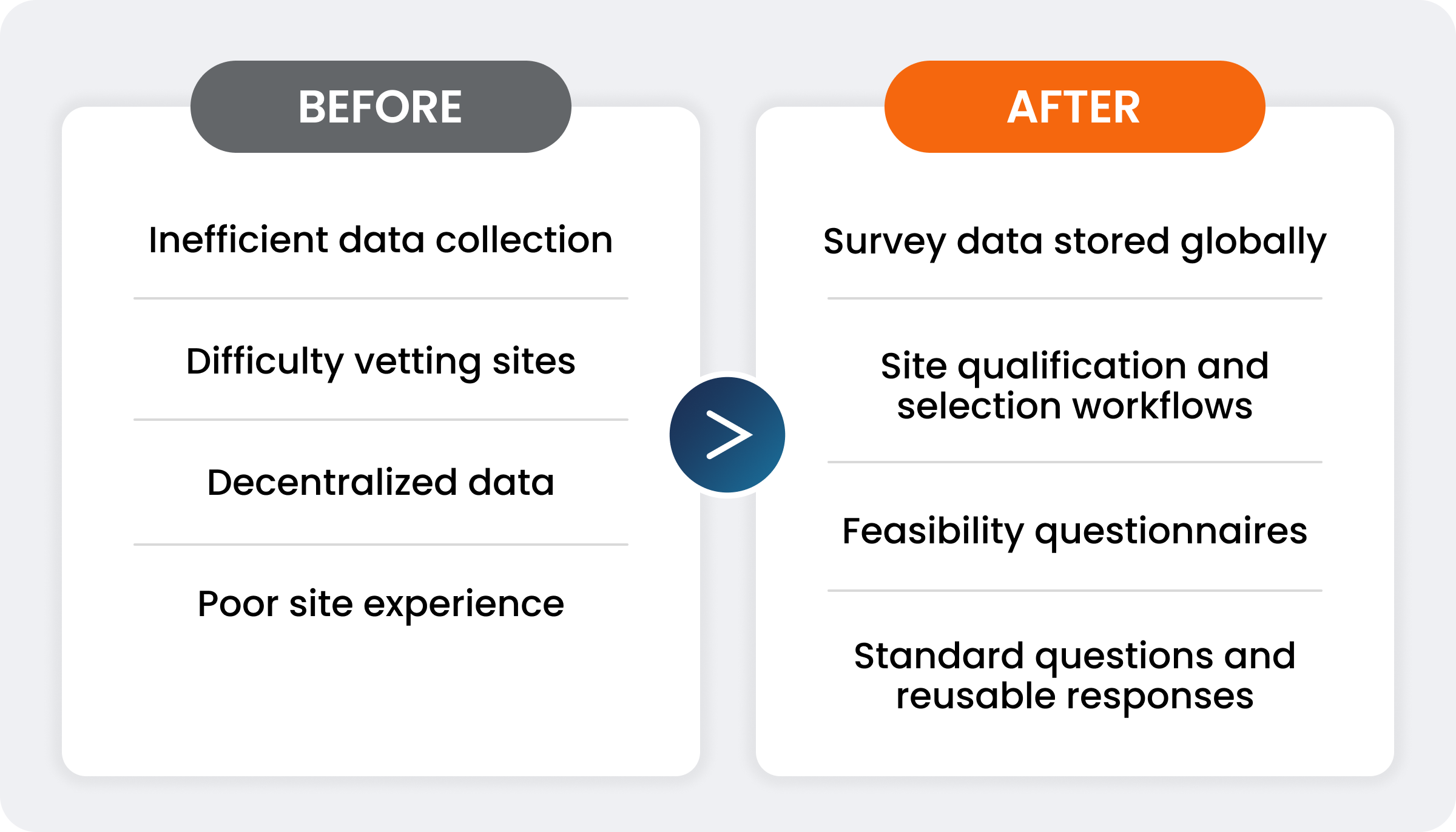
Mano Das, director IT at BMS, noted that decentralized data and document-heavy processes created several challenges. “Previously, we had siloed and inefficient data collection methods with no way to validate a site’s estimates. The entire experience of simply signing a confidentiality agreement and completing a survey was incredibly inefficient for the investigator,” Bischoff shares. “We needed a solution that would respect the site’s time and accelerate the start-up phase.”
Sites participating in multiple BMS studies also expressed frustration with repeatedly answering the same routine questions across various external platforms.
Centralized feasibility surveys drive efficiency and site satisfaction
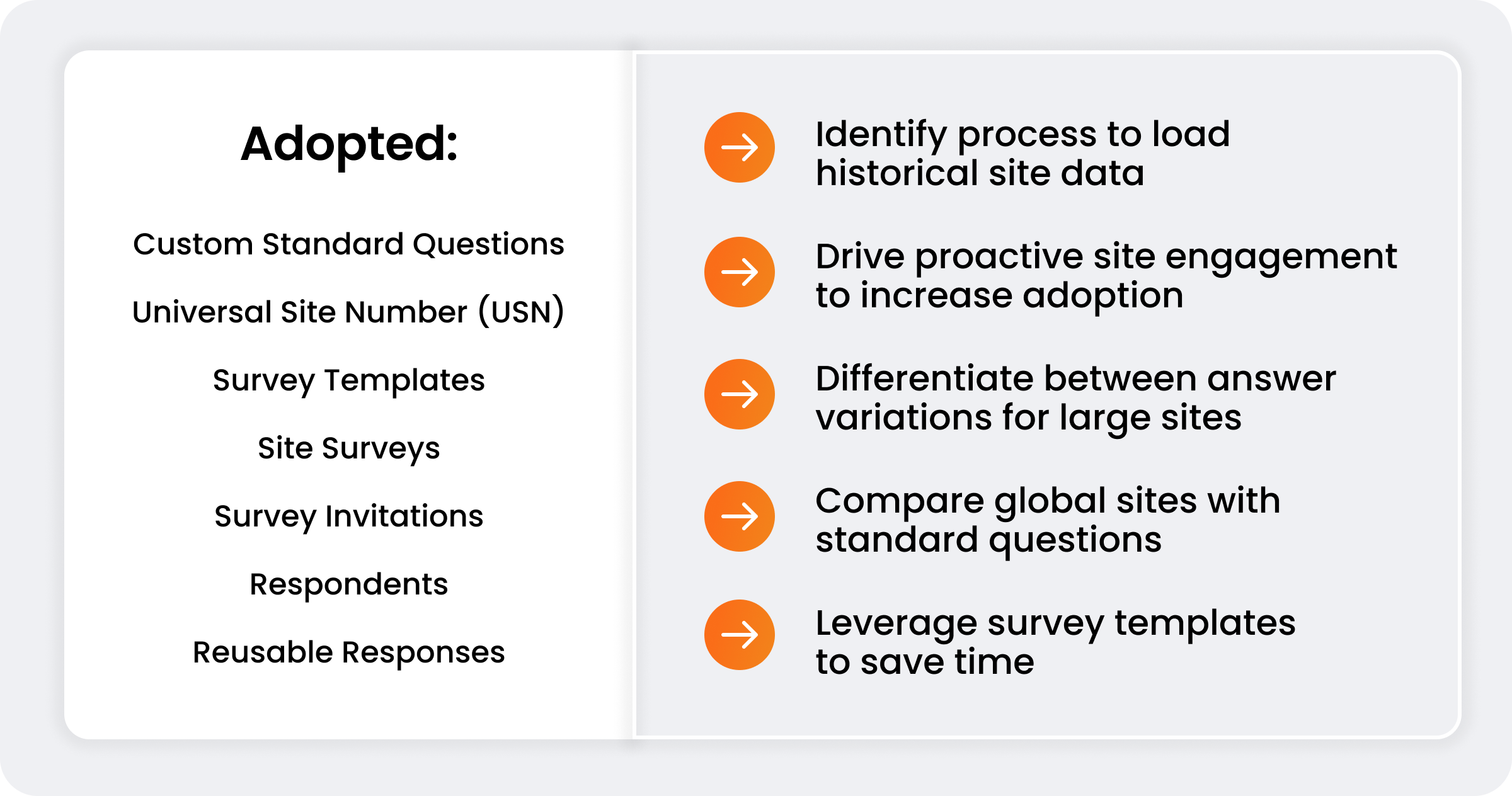
BMS recognized that improving speed and site experience required moving away from manual trackers to a centralized, validated system designed around investigator workflows. By adopting Veeva Clinical Operations, BMS consolidated data and automated key workflows across Veeva CTMS and Veeva Study Startup applications.
The change delivered measurable results. “By using Veeva Study Startup, we’ve reduced the overall timeline from site selection to site activation by 33%. And we shaved off six weeks from the time the protocol is approved to when the first subject is dosed,” says Kurt Bischoff, associate director at BMS.
BMS streamlined feasibility, removing unnecessary steps and logins. “When a sponsor sends a new study request, investigators can efficiently review the protocol, electronically sign the confidentiality agreement, and immediately access the feasibility survey — all through simple email links without ever logging into a separate system,” Bischoff explains. In addition, they can now see centrally stored past feasibility data that’s easily reportable.
BMS established a single source of truth for feasibility activities, using standard questionnaire templates that can be reused across studies. Routine questions (like a site’s preferred language) are pre-populated from prior responses, reducing duplication. As a result, BMS anticipates a 50% reduction in the time required for site coordinators to complete feasibility surveys.
Accelerated site activation through analytics and visualization
To accelerate site activation, BMS moved away from fragmented country-level trackers to a unified foundation in Veeva Study Startup with standardized global milestones, expected documents, and specific country templates. This shift enabled the team to replace manual reporting with interactive real-time dashboards that use visualization to provide executives and study managers with instant oversight.
These visualizations allow for the early identification of activation risks, such as missed deadlines or delayed protocol packages, across various study sites. By leveraging Study Startup cycle-time data and predictive analytics, BMS can now proactively address bottlenecks and capitalize on opportunities for speed and informed, proactive decision-making.
Data-driven site selection and risk-based site activation
With feasibility data consolidated within Veeva, BMS can make informed site selection decisions and improve study oversight. Information collected for one study can be reused for future studies, and teams can track progress against country- and study-level feasibility in near real-time. Across its portfolio, BMS can analyze historical feasibility data by therapeutic specific, region, or site to identify high-performing recruiting sites that have a low risk of study conduct quality concerns.
“The retention and consolidation of feasibility data within Veeva allows us to mine the data,” Das explained. “We can establish correlations between what a site said it could contribute to a study and the actual contributions it ends up making, enabling improved feedback loops to drive site selection decision-making.”
BMS’ vision for study start-up
Looking ahead, BMS plans to further streamline operations, improve the site experience, and do more predictive planning by implementing forecasted site activation dates based on historical cycle-time data.
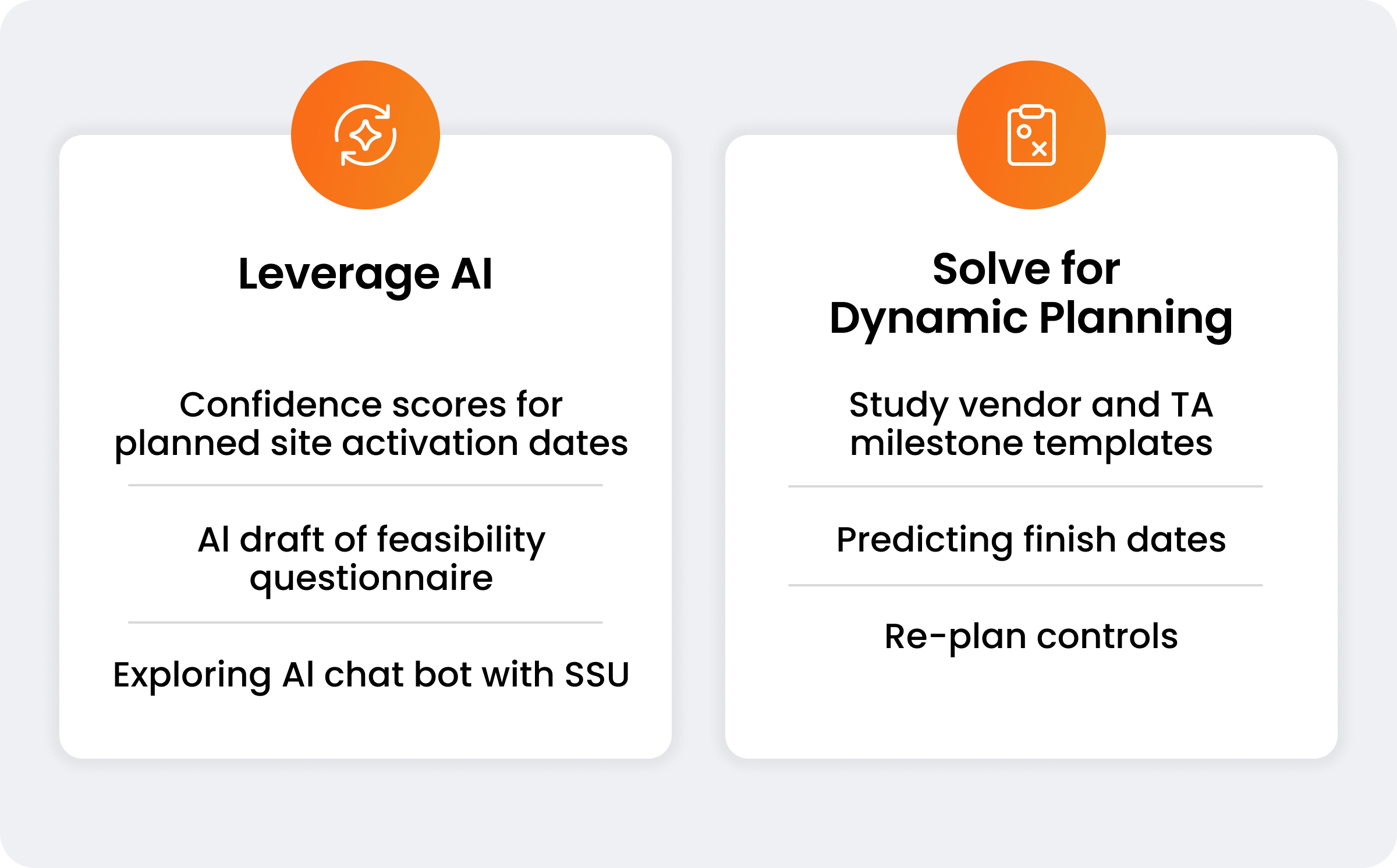
Bischoff notes: “Imagine a future where one or two questions are asked, or perhaps no feasibility questionnaire at all. We are even exploring using large language models to create the first version of the feasibility questionnaire so that we don’t have to spend a lot of time on the first draft.”
See how Veeva Study Startup streamlines site feasibility and selection.