
Blog
Evolving Batch Release: Challenges and Priorities for Biopharma Leaders
Jun 17, 2026 | domenick.naccarato@veeva.com
Jun 17, 2026 | Mike Edwards
From March to May 2026, Veeva welcomed more than 100 leaders from emerging biopharma companies to Quality Executive Forums across five US locations. During these sessions, attendees discussed how batch release works in their organizations today, the biggest obstacles they face, and the improvements they would prioritize if they could make them instantly.
Their feedback points to a clear theme: for many fast-growing biopharma companies, batch release remains too manual, too time-consuming, and too difficult to manage in real time. While every organization has its own operating model, product mix, and supply chain complexity, the responses are notably consistent.
Quality leaders are looking for ways to reduce manual effort, improve visibility, and coordinate batch release activity into a more connected digital process.
Batch release is still heavily manual
A 2026 BioPhorum report found that “under-digitized and inconsistent” batch disposition processes damage efficiency and compliance in biopharma companies.
Feedback from Veeva Quality Executive Forum attendees aligns with this trend. When attendees were asked to describe the current state of batch release in their organizations, one word appears more than any other: manual.
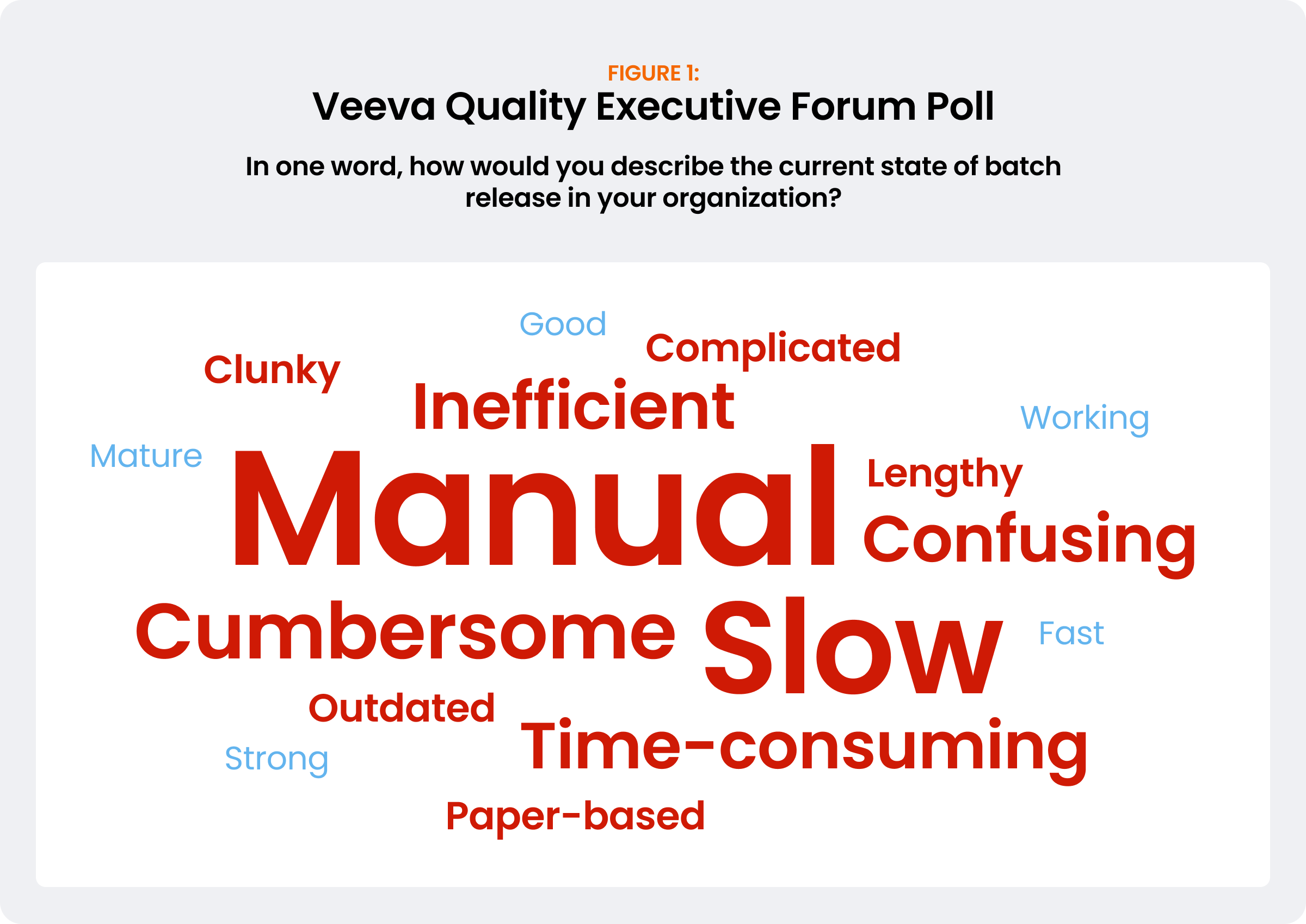
This feedback reflects a broader challenge across the industry. Batch release often depends on information that lives across multiple functions and systems, including quality events, laboratory testing, supplier documentation, ERP data, regulatory information, market registrations, and product genealogy. When that information is not connected, teams are left to gather, check, and reconcile it manually.
For emerging biopharma companies, that may be manageable at an early stage. But as product portfolios expand, supply chains become more complex, and market footprints grow, manual release processes become harder to sustain.
The result is not just administrative friction. Manual batch release can slow decisions, increase dependency on tribal knowledge, and make it harder for teams to know whether a product is truly ready to release for a given market.
Leaders know what they want to improve
Veeva also asked attendees what they would fix first if they had a “magic wand” for batch release. There was another clear consensus on the answer: automation.
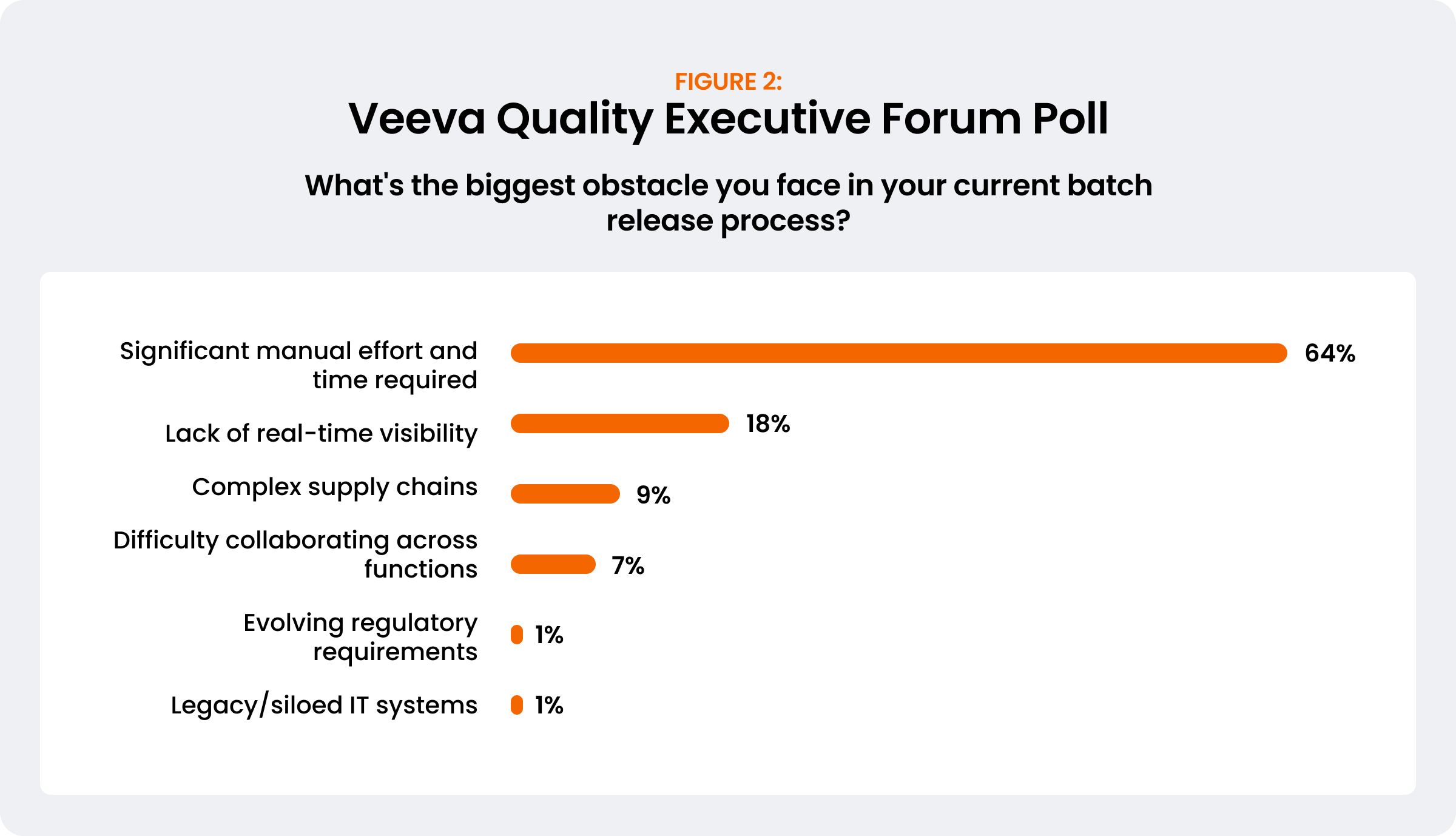
That priority is consistent with the challenges attendees identify. If manual effort and time are the biggest obstacles, automation becomes the natural area of focus. But feedback also shows that leaders are not looking for automation in isolation. They are looking for more connected, consistent, and visible batch release processes.
Top priorities include:
- Improving consistency and collaboration
- Moving away from paper-based processes
- Strengthening reporting
- Improving visibility into lot genealogy
- Connecting batch release with supplier documentation
- Integrating with ERP systems
- Automating jurisdictional release control
Taken together, these priorities point toward a more modern model for batch release: one where teams can bring together the data, documents, quality events, market requirements, and release status needed to make decisions faster, and with greater confidence.
The opportunity is not simply to digitize individual steps. It is to reduce the amount of manual coordination required across the full release process.
Benefiting from batch release best practice
This push for more automated and connected batch release processes isn’t new. The Veeva Batch Release product roadmap has been informed by a growing industry drive to move batch release activity into the fast lane by aggregating batch data to accelerate release decision-making.
By adopting a purpose-built solution that unifies real-time content and data streams from QMS, ERP, LIMS, and RIM activities, quality leaders can now automate manual and time-consuming processes for accelerated batch release.
Disposition owners and Qualified Persons (QPs) can access automatically centralized batch histories and lot genealogies at a glance, saving significant querying time and making market- ship decisions quicker, easier, and more accurate.
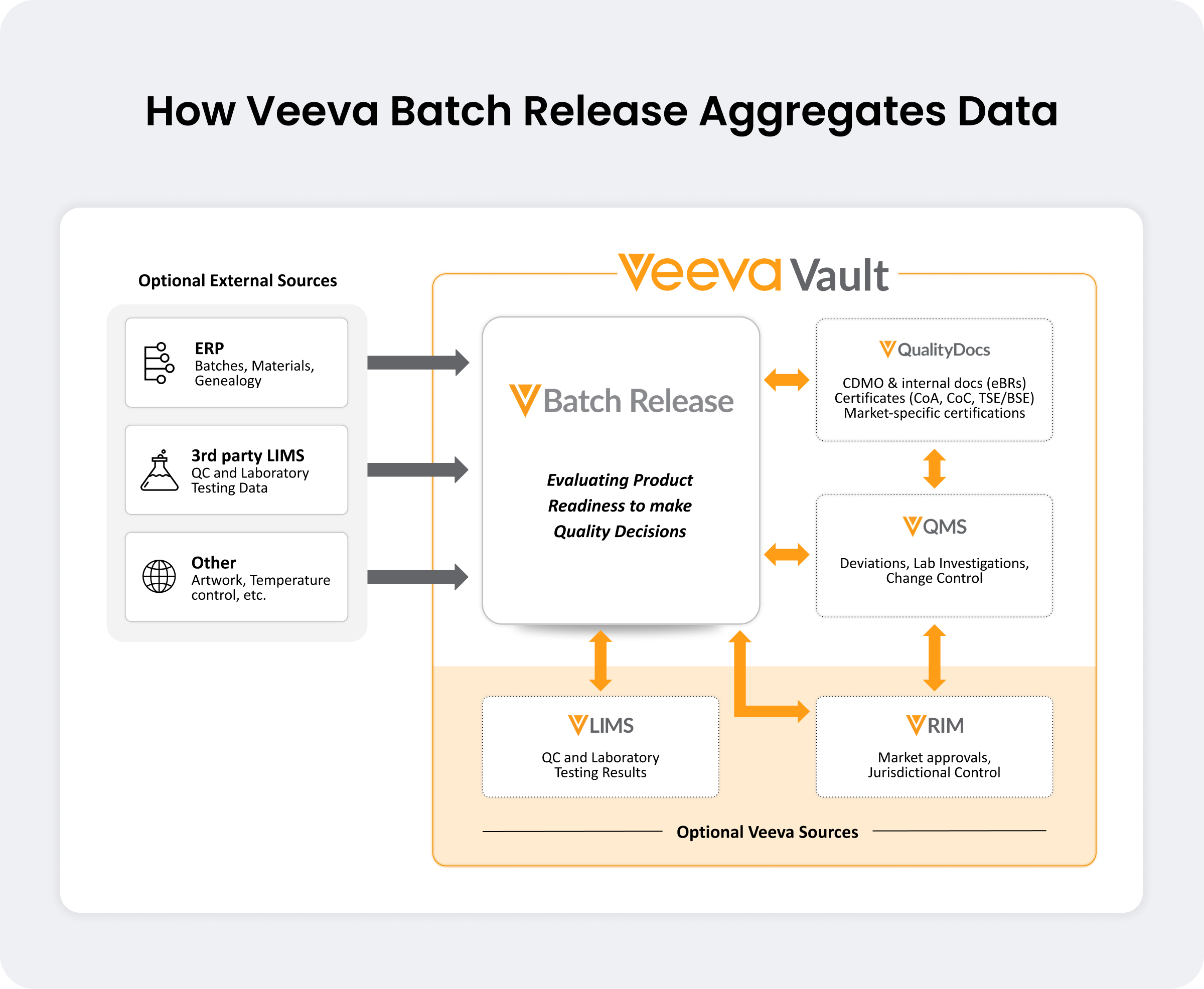
Automated monitoring of market registrations and changes facilitates jurisdictional control for companies shipping to multiple territories. Using collated batch data, real-time “traffic light” compliance statuses are displayed automatically on a market-by-market basis to indicate whether to move ahead with shipping.
The impact of automating ‘slow,’ ‘time-consuming’ legacy release processes can be considerable for biopharma operations:
- Reduced manual effort with automatic centralization of batch data from across the business, saving hundreds of hours of manual querying
- Minimized risk of non-compliant product release through proactive alerts and indicators
- Streamlined release processes that minimize carrying costs and deferred revenue
Looking ahead
The trends across all five Forum sessions are consistent. Leaders of emerging biopharma companies are dealing with batch release processes that often require disproportionate manual effort. They also know what needs to change: more automation, better visibility, stronger integration, and more consistent ways of working.
For organizations planning the next stage of growth, batch release modernization is not only about improving efficiency. It is about building a process that can scale with the business while giving quality teams the information they need to make timely, more accurate release decisions.
Looking to optimize your own batch release processes? Watch “Faster Batch Release: How to Get Started”