Powering Agentic Commercial™:
Latest Innovations in Veeva Vault CRM Suite
Oct 08, 2026 | Matt Farrell
Oct 08, 2026 | Matt Farrell
Delivering meaningful experiences to healthcare professionals (HCPs) and patients requires biopharma teams to provide cohesive, timely information across every interaction, from digital campaigns and WhatsApp messaging to virtual events and field visits. Yet, achieving true omnichannel orchestration is often hindered by disconnected technology stacks and siloed customer data.
Shifting from point solutions to a unified CRM aligns sales, marketing, medical, and service operations for customer-centric engagement. Using CRM as the omnichannel gateway bridges digital, field, and event channels on a single database, giving cross-functional teams real-time intent signals to prevent fragmented or competing HCP outreach.
By combining built-in cross-channel orchestration with embedded AI, Veeva Vault CRM moves beyond traditional record-keeping to actively guide HCP interactions across channels. Industry-specific agentic capabilities, such as the Agentic Call Report™, compliantly convert unstructured voice and free-text inputs into Commercial Evidence™. This equips cross-functional teams — from field reps and MSLs to market access specialists — with shared intelligence, to collaborate effectively and remove treatment barriers.
Explore the latest Vault CRM innovations driving the shift to the Agentic Commercial™ model to achieve precision engagement at scale.
1. Embedded intelligence: AI assistance built into daily workflows
Embedded AI in Vault CRM automates routine prep, interaction logging, and content delivery while enforcing built-in compliance guardrails at every step.
Conversational AI in Vault CRM: Your intelligent field partner
Acts as your native, voice-enabled assistant within Vault CRM to streamline daily execution across field and medical teams.
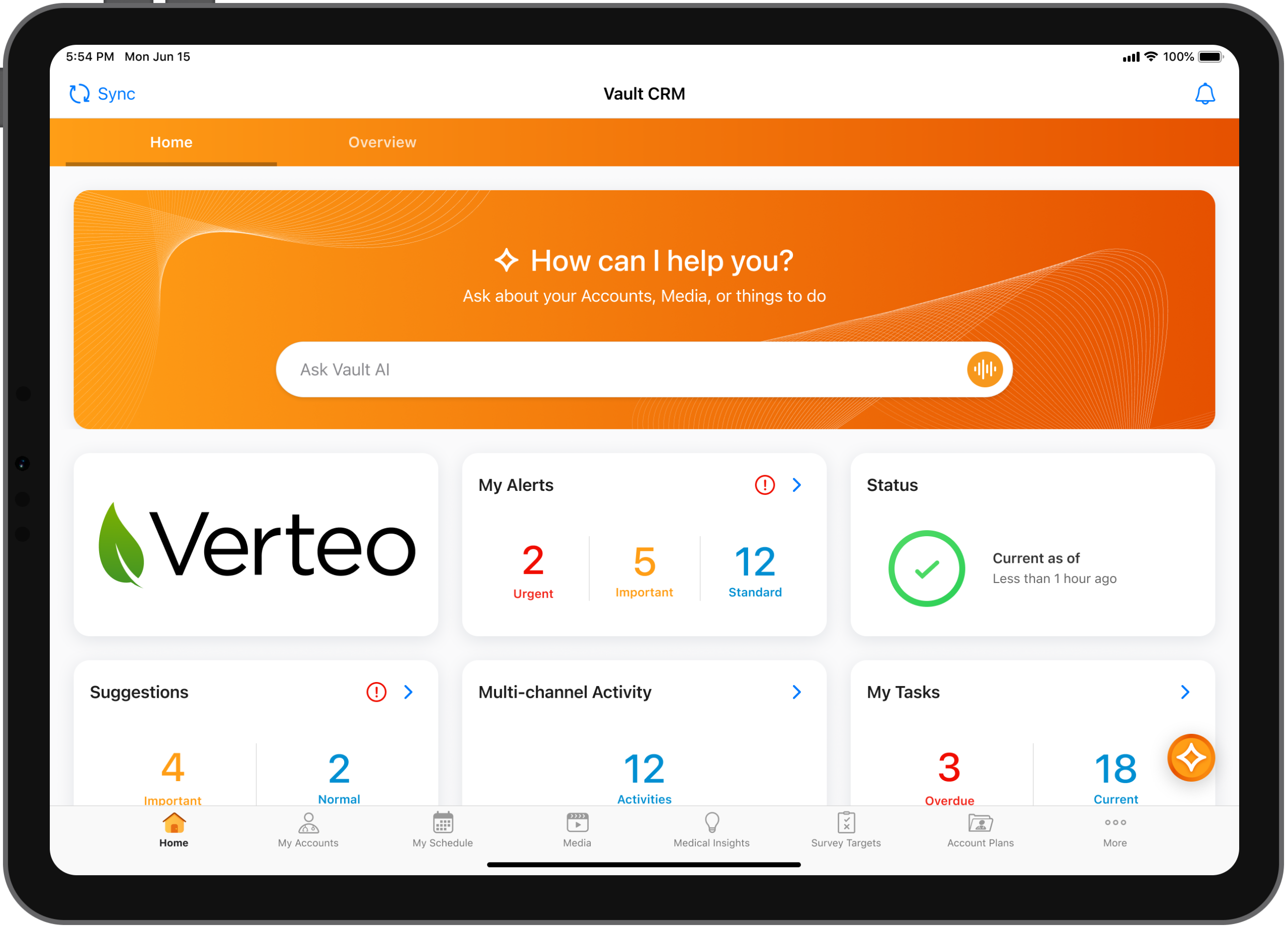
- Conversational AI: Allows field and medical teams to research accounts, request pre-call summaries, or launch CRM tasks using natural voice or text commands. Through two-way voice and text, the agent can reply and ask follow-up questions.
- Agentic Home Screen: A personalized, intelligent start page that presents users with prioritized tasks, upcoming engagements, and context-aware action prompts upon login.
Watch the webinar replay
Agentic Call Report™
Compliantly capture field interaction details using natural voice and free-text entry.
Historically, compliance risks prevented free text entry in call reports. Agentic Call Report solves this challenge through four integrated capabilities:
- Agentic Call Capture: Pre-populates Call Reports and Medical Insights from post-interaction voice notes. Transcribed locally on-device without internet, reps can launch it instantly via Siri, the AI icon, or Conversational AI.
- Agentic Text Monitoring: Scans free-text entries in real time to catch compliance concerns at the point of entry, allowing reps to capture rich conversation nuances compliantly.
- Agentic Call Report View: Enables fast review of the Agentic Call Report. Converts raw call summaries into a clean, read-only narrative layout, allowing fast review and verification on a single screen without toggling tabs.
- Markdown Renditions for Call Reports: Formats notes for instant processing by downstream AI and analytics tools.
To assist with operational planning, the Token Estimator helps organizations project monthly token consumption across embedded AI agents. By modeling user count, daily interaction volume, and expected query complexity, the tool calculates projected usage against included token allotment to simplify capacity planning.
Agentic Insight Quality
Validate Medical Insights entries against your organizational standards with Agentic Insight Quality. AI analyzes observations against active rules and delivers real-time feedback at the point of entry, ensuring every captured insight contains the context and clarity needed to inform business decisions and drive action.
Additional agentic capabilities improve daily operations by enabling natural language queries across media and account histories, personalized tone adjustments within Approved Email, and post-submission text scanning to automatically flag potential risks. Discover all embedded AI features in Vault CRM.
2. Unified omnichannel engagement and content
To deliver coordinated customer experiences, commercial teams engage with HCPs via their preferred channels. Vault CRM removes silos by unifying these channels with structured outbound marketing journeys directly within the core workflow.
Available Channels
Engage HCPs via their preferred communication channels through integrated, compliant messaging and a dedicated portal.
- WhatsApp Business Messaging: Native two-way WhatsApp messaging within Vault CRM enforces Meta business policies, consent capture, restricted phrase blocking, and content templates directly in daily workflows. Field teams manage conversations directly from their iPad while HCPs reply on their phones, maintaining a seamless, single-device workflow.
- WhatsApp Business For Events Management: Allows event teams to send compliant invitations and event-related updates directly through WhatsApp. Using a digital channel preferred by many HCPs helps increase registration rates and overall event attendance compared to paper or email invitations.
- Text Messaging: Built on AWS End-User Messaging, text messaging shares the same compliance, consent management, and restricted phrase blocking features as the WhatsApp Business integration. Field teams can switch seamlessly between WhatsApp and SMS directly on their iPad based on HCP preference, without switching devices or workflows.
- My Engage Portal: Provides a branded, self-serve portal where HCPs access shared content, register for events, book meetings, or initiate compliant chat with field teams.
- Secure Messaging via Approved Email: Guides HCPs to high-value, sensitive content while maintaining strict content privacy, brand control, and full analytics visibility.
HCP Journey Orchestration with Campaign Manager
Run connected campaigns across digital, field, and event channels using marketing automation built specifically for life sciences.
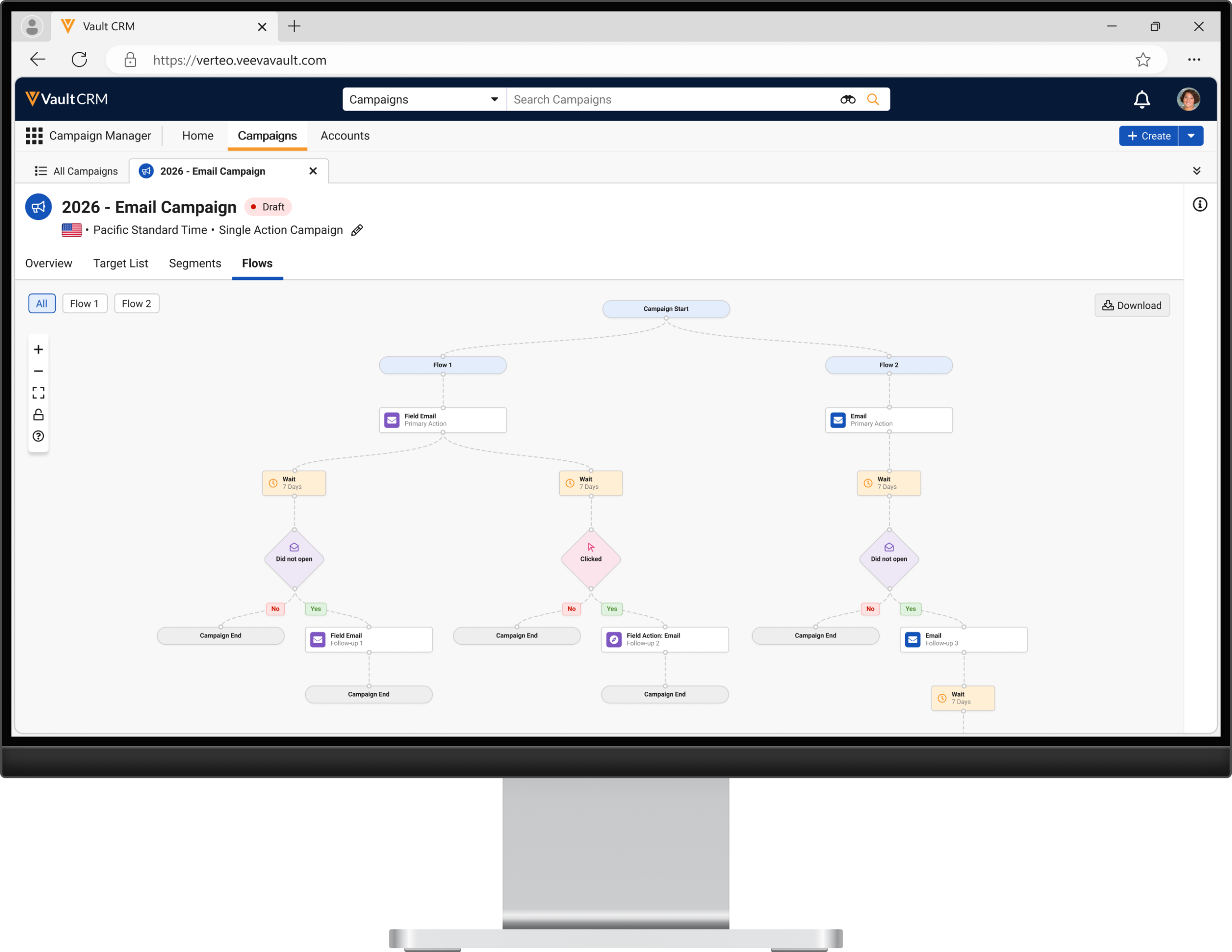
Commercial teams can seamlessly connect customer data, approved content, and daily workflows in Vault CRM Campaign Manager. With these embedded capabilities, marketers can execute dynamic omnichannel campaigns at scale from a single platform:
- Orchestrate the field through journeys: Enables marketers to visualize and automate customer flows using an intuitive drag-and-drop interface. Journeys dynamically blend home office outreach, field emails, and rep suggestions, adapting in real time to HCP responses and external triggers.
- Bring field insights into campaigns: Connect marketing and field execution by automatically routing messages through the assigned rep for each HCP. With one click, marketers can enable field review, allowing reps to approve or adjust email timing based on local relationship insights.
- Conversational marketing: Transforms static mass communications into dynamic, two-way dialogues using Ostro Email’s conversational AI to deliver instant, compliant answers to HCP inquiries. This eliminates “do-not-reply” dead ends and captures actionable Commercial Evidence to address treatment barriers in real time.
Vault CRM Service Center: Streamlined execution for customer service
Unifies customer service and inside sales support into a single console, built directly in Vault CRM.
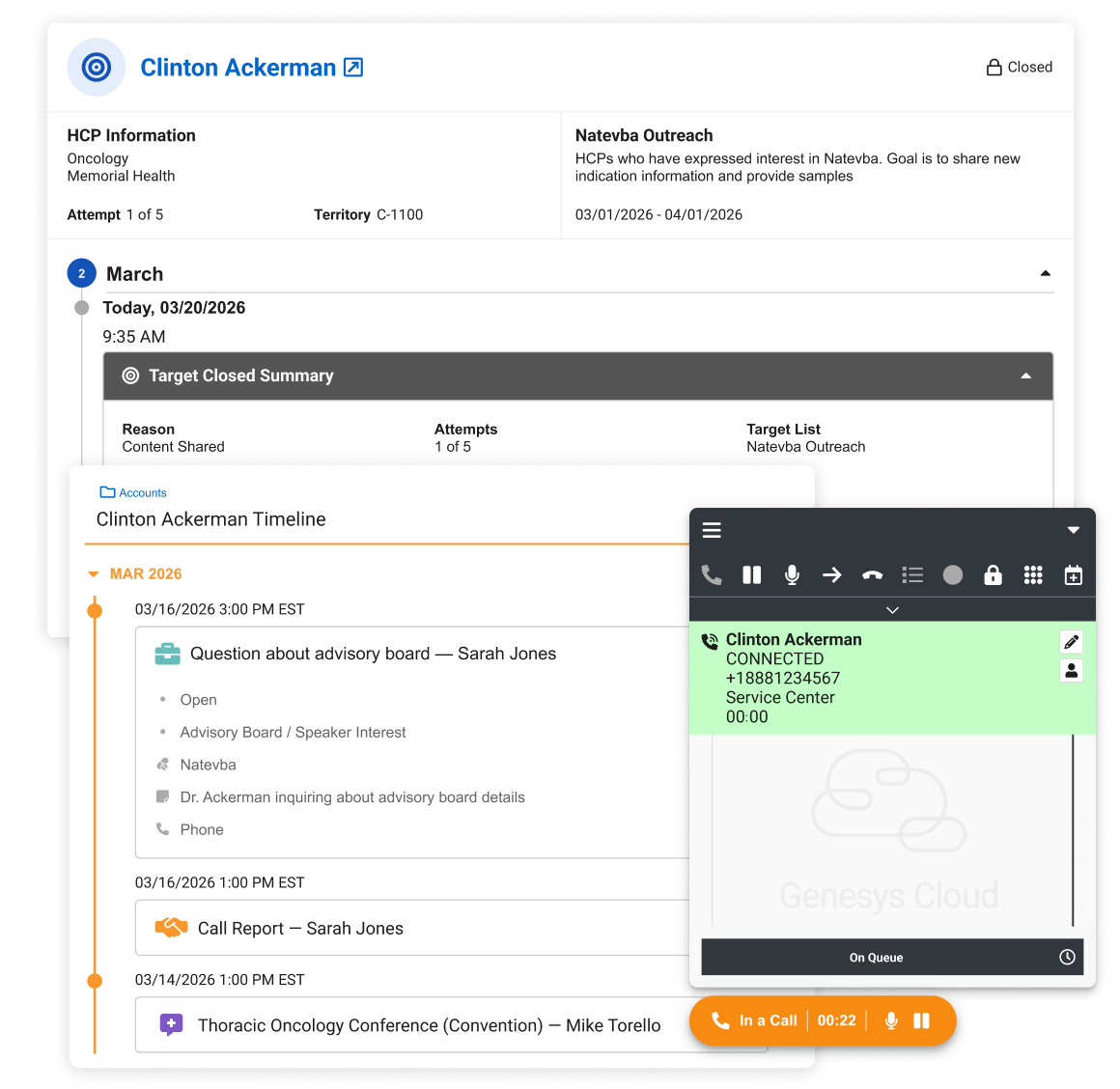
- Expanded Native Telephony Integrations: Service Center now features out-of-the-box telephony connectors for Amazon Connect, Genesys Cloud, Microsoft Teams Phone, and Five9. This delivers click-to-dial, inbound screen pops, and automatic call logging directly within the console without requiring custom middleware.
- In-Console Knowledge Base: A dedicated Knowledge Base tab gives agents instant access to approved reference materials right beside live interactions. Reps can verify guidelines without navigating away from Vault CRM, helping lower case handling times and prevent outdated information sharing.
- Embedded Data Views (X-Pages as Case Tabs): Organizations can now embed X-Pages directly as Case Tabs in the console layout. Agents can view critical external data—such as ERP details or BI metrics—right alongside live customer cases without toggling between windows.
- Streamlined Case Management: Configurable Case Details and “Preferred Case Details” highlight key data fields upfront, empowering agents to resolve cases faster.
3. Precision engagement across sales, marketing, and medical
Vault CRM provides native capabilities that align key account managers, medical science liaisons, and field reps around high-priority customer opportunities.
Native Support for Dynamic Targeting
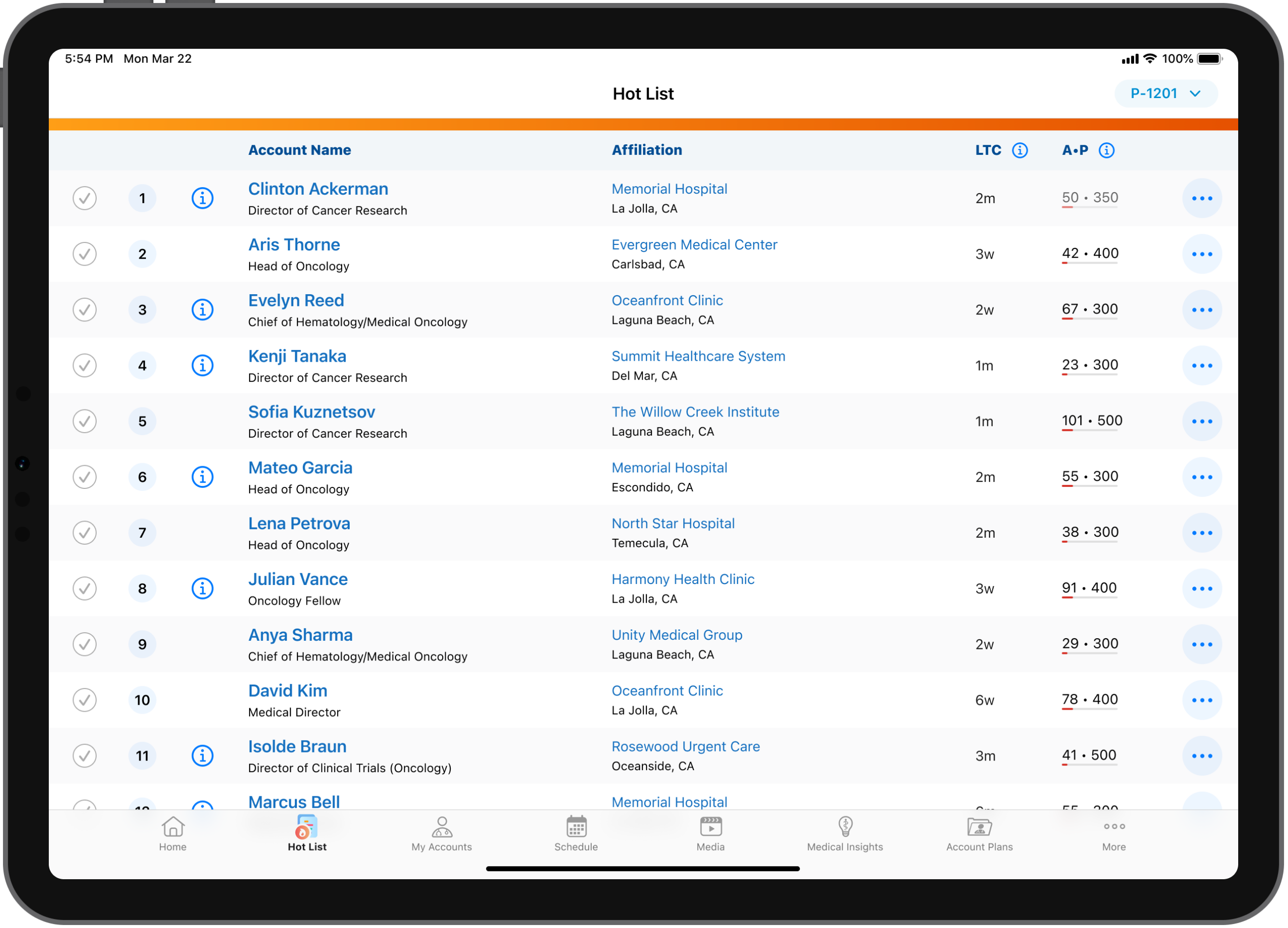
Hot Lists provide a dynamically ranked target list each week, allowing field teams to view prioritized account histories, and launch immediate outreach (e.g., scheduling calls or sending Approved Emails) from a single view.
Modernized Key Account Management
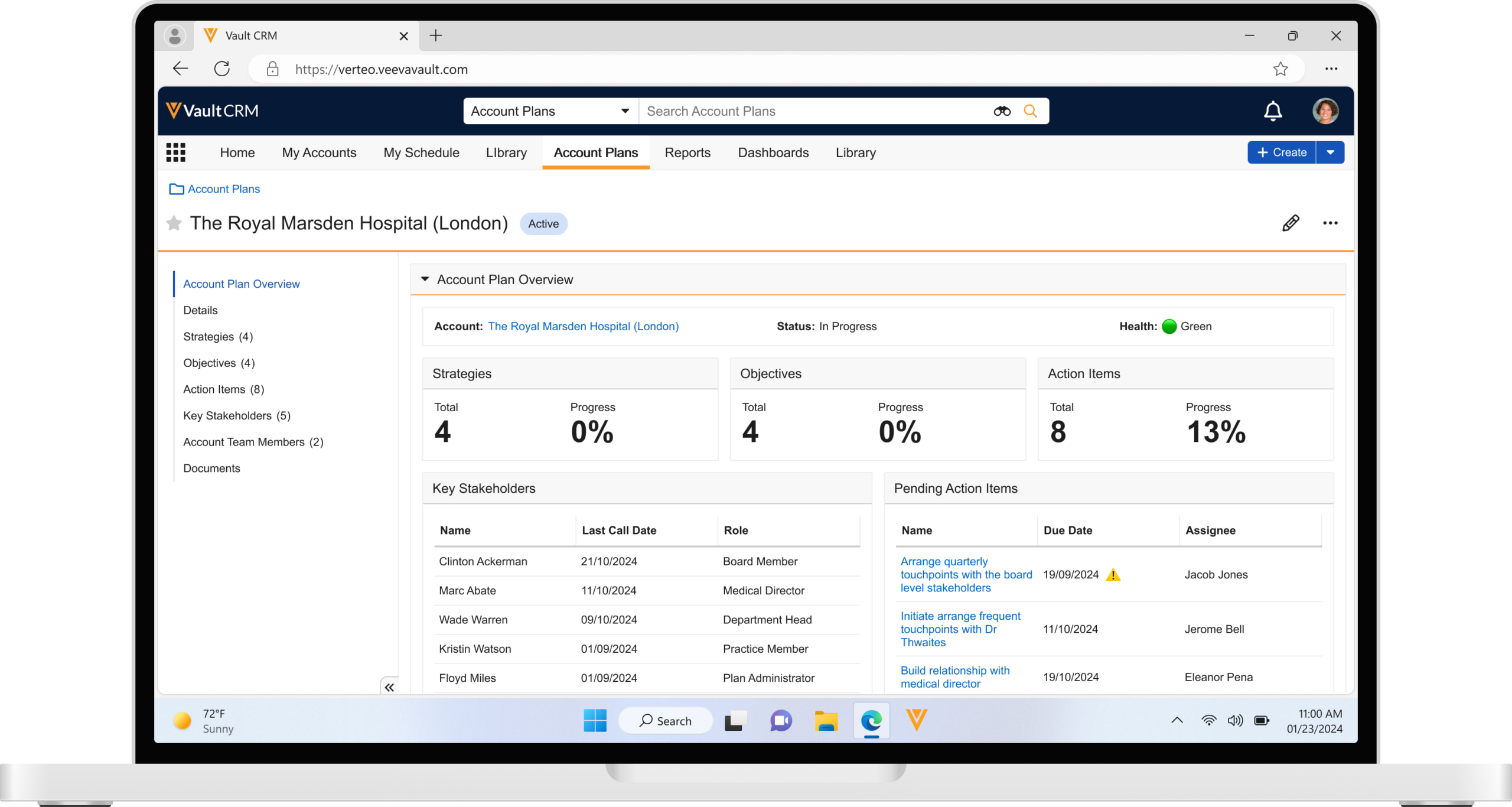
- Redesigned Account Plan UI: Simplifies how Key Account Managers (KAMs) manage complex account hierarchies (strategies, objectives, and action items) on a unified visual workspace. KAMs get complete visibility and faster daily execution with direct inline editing, customizable account views, and embedded tools like Stakeholder Navigator.
- Microsoft Teams Integration: Links Microsoft Teams channels directly to Vault CRM Account Plans, allowing cross-functional key account management teams to collaborate in Teams while keeping strategy tied to CRM data.
Field Reimbursement Management
Field Reimbursement Management simplifies patient access support by enabling field teams to track, update, and resolve reimbursement cases directly from Patient CRM. Users can manage active caseloads, such as prior authorizations and copay assistance, and link case activity straight to Call Reports for seamless follow-up.
Transition to the Agentic Commercial model
These innovations reflect a broader shift: Moving CRM from a system of record to an intelligent system of insights and guidance. By connecting data, content, and channels on a single platform, biopharmas can eliminate silos, uncover Commercial Evidence, and accelerate patient access to therapies.
Ready to bring digital, agents, field, and content together? Explore how Vault CRM Suite powers the new Agentic Commercial model, and join the Vault CRM Community on Veeva Connect to see how industry peers are leading the transition.